Africa Circular Resource and Data Initiative
Digital infrastructure for a more visible, traceable and measurable circular economy.
An initiative developed by the Circular Systems and Data Hub to transition African recovery networks from fragmented informal pipelines to verified, asset-generating circular economies.
Across Africa, informal recovery networks play a critical role in collecting, sorting and returning valuable materials often regarded as waste to the economy. Yet these activities remain largely fragmented, informal and poorly documented.
Without reliable, granular material-flow data, it becomes difficult to measure recovery, strengthen markets, plan infrastructure, design effective circular-economy programmes and recognize the contribution of the people doing the work.
ACRI is designed to make those flows visible to facilitate Africa's push for circularity and environmental sustainability.

Nigerians earn their living from informal waste recovery
of municipal solid waste generated yearly in Nigeria
is disposed of on land, often through uncontrolled disposal and open burning
of untracked material value currently lost from circulation
CO₂e in emissions reported for Nigeria in 2022 from waste-sector mismanagement
Africa's informal recovery workers already play a critical role in diverting materials into recycling markets, but much of this activity operates outside structured information systems.
Informal collectors gather recyclables under hard conditions.
Materials sold to micro-aggregators with basic cash handovers.
Consolidated waste moves downstream without systematic receipts.
Resources remain invisible. Markets remain fragmented. Planning remains reactive. Impact remains difficult to prove.
Mapping and onboarding recovery actors.
Logging who, what, where and how much.
Linking Collectors → Aggregators → Processors.
Material movement becomes transparent and visible.
Reporting economic, environmental and climate outcomes.
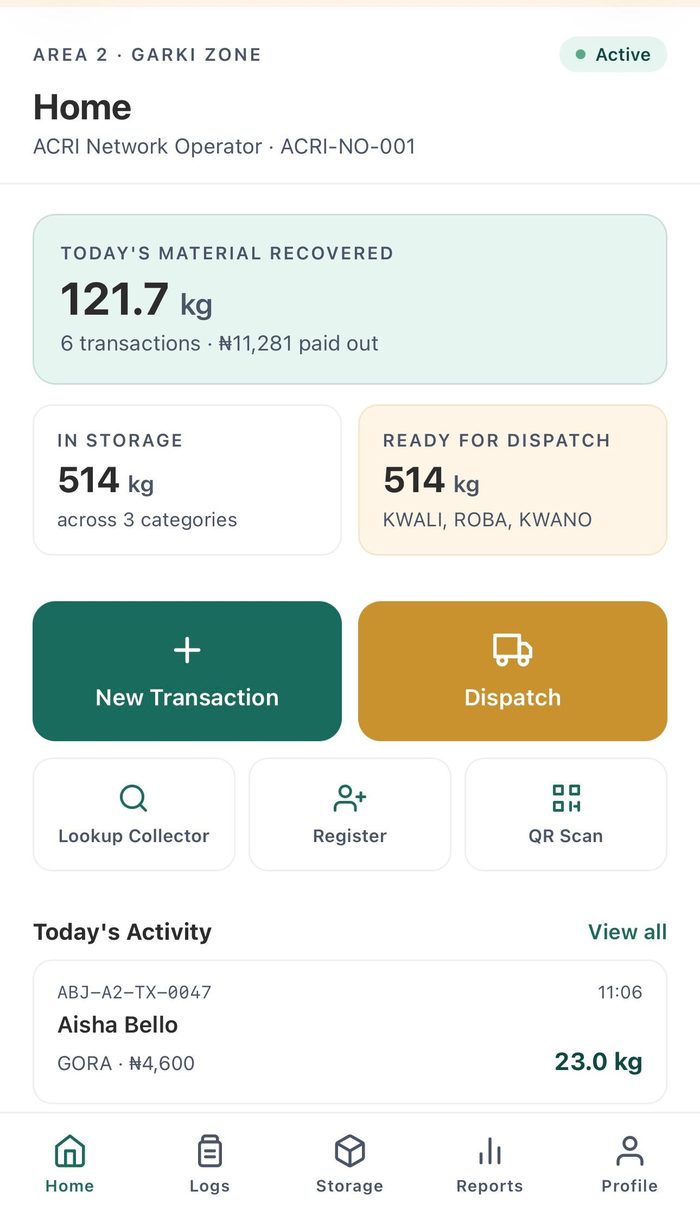
Every intake and dispatch is recorded in detail. Seamless mobile inputs for field agents.
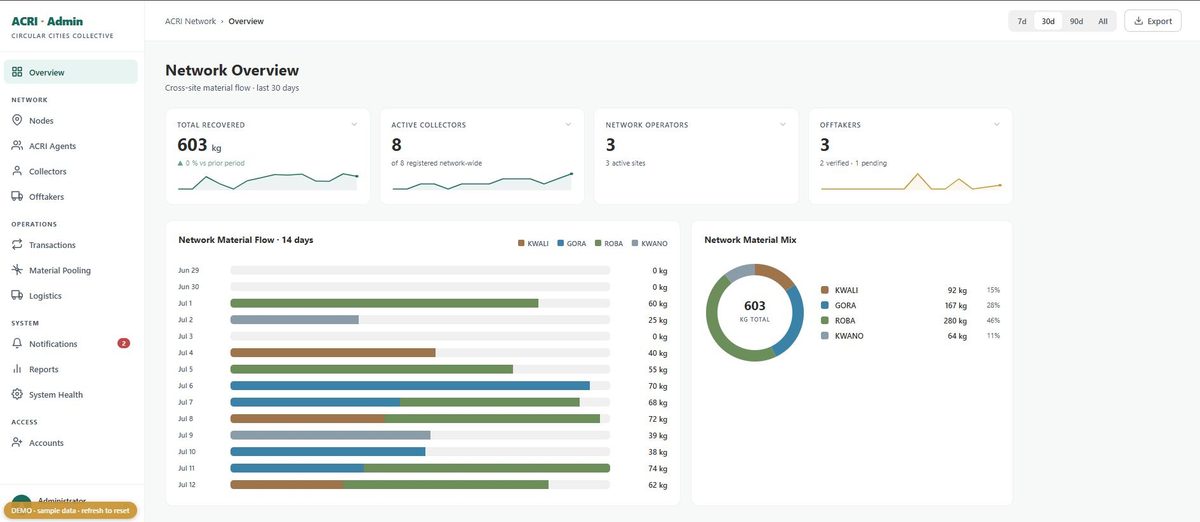
Cross-node material flow, collectors, agents, operators and offtakers in one comprehensive dashboard.
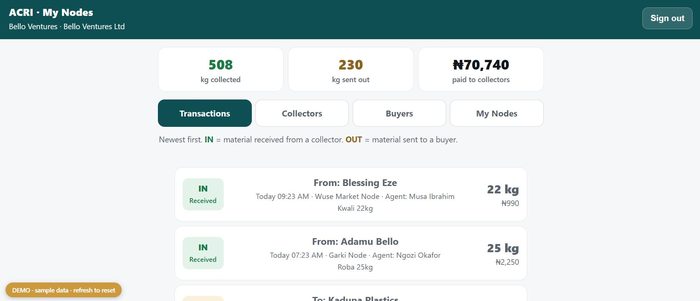
Tracks material incoming and outgoing operations and collector payments, digitizing physical ledgers.
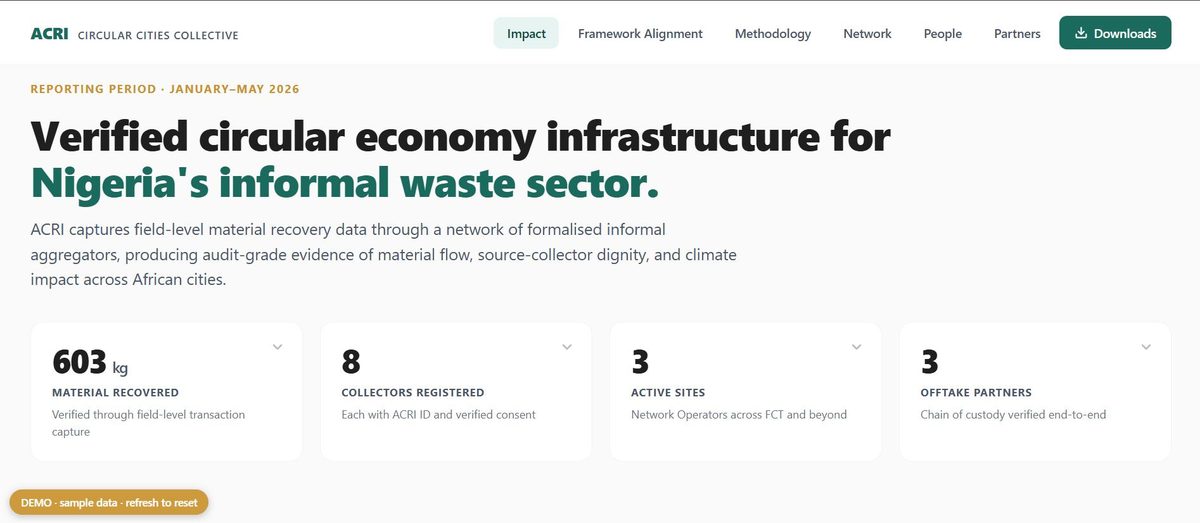
Evidence layers for stakeholders. Aggregated public dashboard showing audited, real-time impact.
ACRI gives circular economy actors the data, visibility and connections to make better decisions and create measurable value.
Digital identity, transaction history, verified activity and improved livelihoods through stronger access to buyers and opportunities.
Real-time material tracking, transparent supplier logs, inventory metrics, and direct transaction records.
Better visibility of material availability, locations, volumes, quality grade, and dynamic supplier connectivity.
Traceable recovery records, authentic compliance audits and actionable evidence for sustainability and Extended Producer Responsibility (EPR) reporting.
Direct integration to structured municipal recovery systems with real-time feedback on their aggregate ecological contributions.
More organized waste recovery, significantly cleaner local surroundings and newly-unlocked economic activities.
Verifiable empirical evidence to plan critical municipal infrastructure, target local developmental interventions, monitor systemic metrics and design state circular economy policies.
Continuous verified activity data for active monitoring, auditing, ecological impact measurement and standard donor reporting metrics.
Granular visibility into volume forecasts, recovery actors, historical transaction scales and emerging circular-market asset opportunities.
Robust, audited data foundation for measuring net material diversion and developing globally credible environmental and climate-avoidance metrics.
ACRI makes resource recovery more visible, efficient and measurable across various sectors.
Make recovery activity visible and strengthen circular markets.
Divert materials from uncontrolled disposal. Reduced pollution and flood risk.
Supports measurable emissions avoidance and resource efficiency outcomes.
Recognize and connect informal recovery workforce to structured value chains.
Give institutions better data for planning, monitoring and evaluation.
Launch in selected institutions, communities and recovery networks within the Federal Capital Territory (FCT). Test the data infrastructure, workflows, and verification mechanisms in real operating conditions.
Measure material flows, active participation, aggregate recovery volumes, livelihoods and environmental outcomes. Refine the core model using empirical data and document structural guidelines.
Convert the validated model into a replicable software framework that can be easily deployed across cities, sectors and other African nations — connecting disjointed circular markets.
“Start local. Prove the model. Standardize what works. Scale across Africa.”